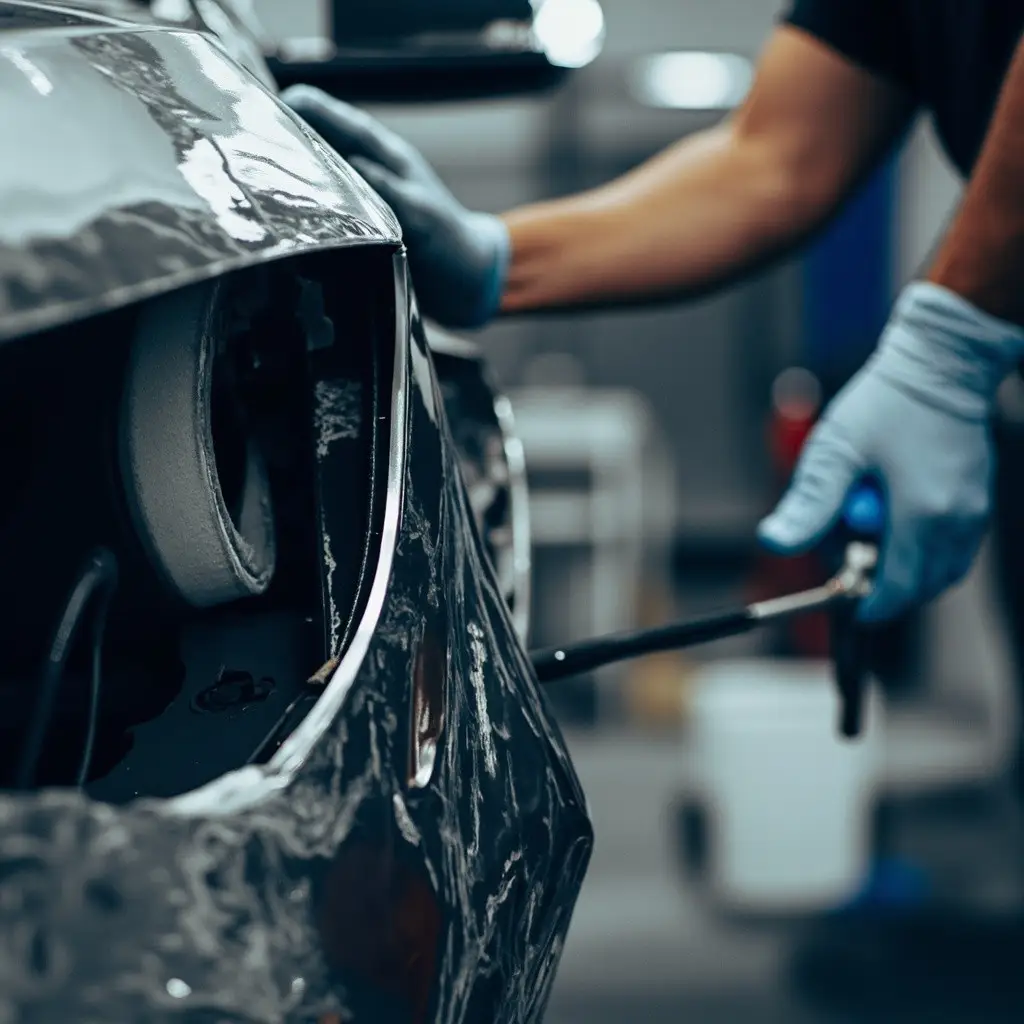
Lease car return repairs almost always come down to a single comparison: the bodyshop quote for putting the damage right against the penalty charge the lease company applies at the end-of-term inspection. Most drivers save real money by repairing small cosmetic damage before collection, because independent bodyshop rates tend to sit well below the in-house penalty schedule the funder uses. Anything beyond light scuffs, parking dents, or kerbed alloys usually belongs with a specialist rather than a DIY kit, both for finish quality and for the resale value the inspector will be judging.
This guide walks through how the hand-back inspection works, what counts as fair wear and tear, which repairs genuinely save money, and how a bodyshop estimate compares to a typical lease penalty. You'll find practical guidance for drivers in Coventry and across the West Midlands approaching the end of a personal contract hire (PCH) or business contract hire (BCH) agreement.
What Are Lease Car Return Repairs and When Do You Need Them?
Lease car return repairs are bodywork fixes carried out in the weeks or months before you hand a contract hire or lease-purchase vehicle back to the finance provider. The aim is simple: reduce or eliminate the charges the inspector applies for damage they consider beyond fair wear and tear.
You only need them if your car has visible cosmetic damage that you don't expect to pass the BVRLA fair wear and tear standard. Light scuffs, small dents, kerbed wheels, minor bumper scrapes, and chipped paint along the bonnet or leading edges are the most common triggers.
How Does the Lease Hand-Back Inspection Actually Work?
A third-party inspector, usually appointed by the lease funder, walks the vehicle with a checklist based on the BVRLA fair wear and tear guidelines. They log every scuff, dent, chip, and wheel damage onto a condition report, photograph each item, and apply a cost to repair based on the funder's own labour and parts rates. Those line items roll up into the final charges on your hand-back statement.
The inspector isn't trying to find fault. They're checking that the car is in the same condition you'd reasonably expect for its age and mileage. Most inspections take 30 to 60 minutes and you'll usually be allowed to attend.
Fair Wear and Tear vs Chargeable Damage: What's the Difference?
The BVRLA publishes a fair wear and tear standard that most UK lease funders reference in their contracts. A damage item is usually chargeable if it's bigger than what the guide allows for the vehicle's age and mileage band.
Common rules of thumb include:
- Stone chips: A few chips under 5mm on the bonnet edge or front bumper are typically acceptable. Larger chips, rust spots, or panels with multiple chips are usually chargeable.
- Scratches: Surface scratches under 25mm that polish out with compound are normally fair. Deeper scratches that catch a fingernail generally aren't.
- Dents: Dents up to 15mm across with no paint damage often pass. Larger dents, multiple dents on one panel, or anything showing paint cracking is chargeable.
- Bumper scuffs: Light grazing that hasn't broken through the colour coat may be acceptable. Cracks, gouges, or scuffs over 25mm typically aren't.
- Alloy wheels: Scratches on the rim spoke face or kerbing up to a certain length is often fair. Deeper kerbing that exposes bare metal and any buckled wheel is chargeable.
The fair wear and tear schedule is the deciding document. Reading your funder's specific version before booking repairs can save you paying twice for the same damage.
Common Damage We See on Lease Cars Before Hand-Back
Three years of daily driving on UK roads tends to leave predictable marks. The same handful of damage types come through our Coventry workshop before most hand-backs:
- Bonnet and front bumper stone chips: Motorway driving throws up chips across the nose, often visible as a scatter of dark dots on light colours.
- Kerbed alloys: Usually the front wheels and most often the near-side rim from tight multi-storey turns.
- Door and quarter panel scratches: Car park dings, branch scrapes, and shopping trolley marks along the flank.
- Rear bumper scuffs: From loading the boot or misjudging a reversing manoeuvre.
- Roof scratches: From roof boxes, bike racks, or brushing under low car park ceilings.
None of these are unusual and none of them should panic you. Each one is repairable. The question is whether the repair costs less than the penalty.
Should You Repair Before Inspection or Let the Lease Company Handle It?
Repair before inspection if you can get the job done at a competitive bodyshop rate, ideally well before the hand-back date. Letting the lease company handle it is convenient but it usually costs more, because the funder adds a handling margin on top of its own repair rate.
Comparing the two is straightforward. Ask your bodyshop for a written estimate on each damage item, then read the funder's penalty schedule or request a sample cost from their hand-back team. If the bodyshop total is lower, repairing ahead of time saves you money and often improves resale value too.
Which Repairs Save Money Before a Lease Hand-Back?
The repairs that typically pay for themselves before hand-back sit at the lighter end of the damage scale. Anything heavier tends to either match or exceed the lease penalty because of the extra labour, parts, and paint work involved.
- Light scuff and scratch repairs: Smart repairs on a single panel are cheap and fast, often completing in a few hours.
- Small dent removal: Paintless dent removal (PDR) on a single door or panel is often the most cost-effective fix for parking dents without paint damage.
- Bumper scuff blending: A localised blend into the existing finish avoids a full bumper repaint and keeps the cost well below a penalty.
- Alloy wheel refurbishment: Powder coat or wet paint refurbishment on one or two wheels usually costs a fraction of the lease company wheel replacement charge.
- Stone chip touch-ups and machine polishing: A panel polish combined with targeted chip paint can lift a bonnet back inside fair wear limits.
Heavier panel damage, structural items, paintwork needing a full panel respray, or anything affecting sensors and cameras usually isn't worth pre-repairing. In those cases the lease penalty and the bodyshop cost converge.
How We Carry Out End of Lease Repairs
Our end of lease repair service follows a fixed inspection-to-handover routine so nothing gets missed before you return the keys.
- Pre-inspection estimate: You send photos and a list of damage items, or drop the car in. We scope each repair and quote against the funder's penalty schedule where possible.
- Strip-down check: For anything beyond a SMART repair, we strip the panel to look for hidden damage, sensor mounts, or trim clips that need replacing.
- Body repair and panel preparation: Filler, panel beating, or PDR as appropriate, followed by flatting and priming to a smooth base.
- Paint matching and blending: We use the manufacturer's paint code, spectrophotometer readings where needed, and blend into the adjacent panel so the finish is consistent. Our article on why paint matching matters in car body repairs explains how this works in detail.
- Lacquer and cure: We bake the panel at controlled booth temperature, then polish and check the finish in our lighting rig.
- Reassembly and quality check: Trim and badges go back on. For any vehicle with front-facing cameras, parking sensors, or radar, we confirm sensor alignment and advise on calibration where the funder requires it.
If you're in or around Nuneaton or elsewhere in Coventry and Warwickshire, this routine lets us turn most lease prep jobs around in two to four working days, depending on parts and paint curing.
What Affects the Cost of Pre-Hand-Back Repairs?
Bodyshop quotes vary, but the same cost drivers apply whether you're repairing a scratch or a full quarter panel.
- Number of damaged panels: One panel is a SMART repair. Three panels tip the job into a multi-stage respray with blending.
- Paint type: Solid colours match easiest. Metallic, pearlescent, and matte finishes add labour and material cost.
- Parts and trim: New bumper mouldings, grilles, or sensor strips add to a bumper repair whether you're repairing or replacing.
- Sensor and ADAS calibration: Front radar, parking sensors, and cameras need recalibration after certain body repairs, which adds time and specialist equipment.
- Hidden damage: Once a bumper is stripped, we sometimes find impact damage behind it that wasn't visible on the outside.
- Vehicle make and model: Paint codes for premium and German marques can take longer to source and match.
- Labour rate and finish quality: Independent bodyshop rates vary across Coventry and the West Midlands. A cheaper quote sometimes means no booth baking or no blending, which shows at inspection.
Always ask for a written breakdown that separates labour, parts, paint, and lacquer so you can compare it fairly against the funder's penalty line items.
How Long Do Pre-Return Repairs Usually Take?
Most lease prep work fits into a short window, but the exact timing depends on what you're repairing and the workshop's schedule.
- SMART repairs: Same day, often a few hours. One or two panels, minor scuffs and chips.
- Alloy wheel refurbishment: One to two days including cure time. Multiple wheels can stretch this.
- Bumper repair and blend: Two to three days including paint and lacquer cure, plus any sensor checks.
- Multi-panel respray: Three to five working days, especially where panels need filler work or painting in a sequence.
Parts supply can add days. Insurance approvals, where the lease car is covered for accidental damage, add more. Book the inspection in advance of your hand-back date by at least two to three weeks so a single delay doesn't leave you without a car.
How to Get an Accurate Estimate Before Hand-Back
The fastest way to a reliable quote is to give the bodyshop what the inspector will see. Here's what helps when you get in touch.
- Clear photos of each damage item: One wide shot of the panel and one close-up, in good light, with a coin or tape measure for scale.
- Vehicle details: Registration, paint code if known, and trim level. The paint code lives on a sticker in the door shut, under the bonnet, or in the service book.
- Mileage and term end date: So we can line the estimate up against the funder's wear bands.
- Funder penalty schedule: A copy of the hand-back guide if you have it, or the funder's sample charges if their website lists them.
- Sensor and trim notes: Mention parking sensors, front cameras, or aftermarket accessories that the repair needs to work around.
A bodyshop that comes back with a single round figure without asking for any of this is guessing. Ask for the breakdown.
Getting Your Lease Car Ready for Inspection
The cheapest outcome at hand-back usually comes from a clear, itemised comparison between an independent bodyshop quote and the funder's penalty schedule, done in enough time to act on the result. Photograph every damage item, get a written breakdown from the bodyshop, and read the funder's fair wear and tear guide so you know which items genuinely need repairing.
If you're approaching hand-back in Coventry, Nuneaton, or anywhere across the West Midlands, send us a set of photos and your funder's penalty list. We'll put a written estimate against each line so you can see, in pounds, which repairs are worth doing and which to leave for the inspector.
Leave a Comment
Comments
No comments yet.